
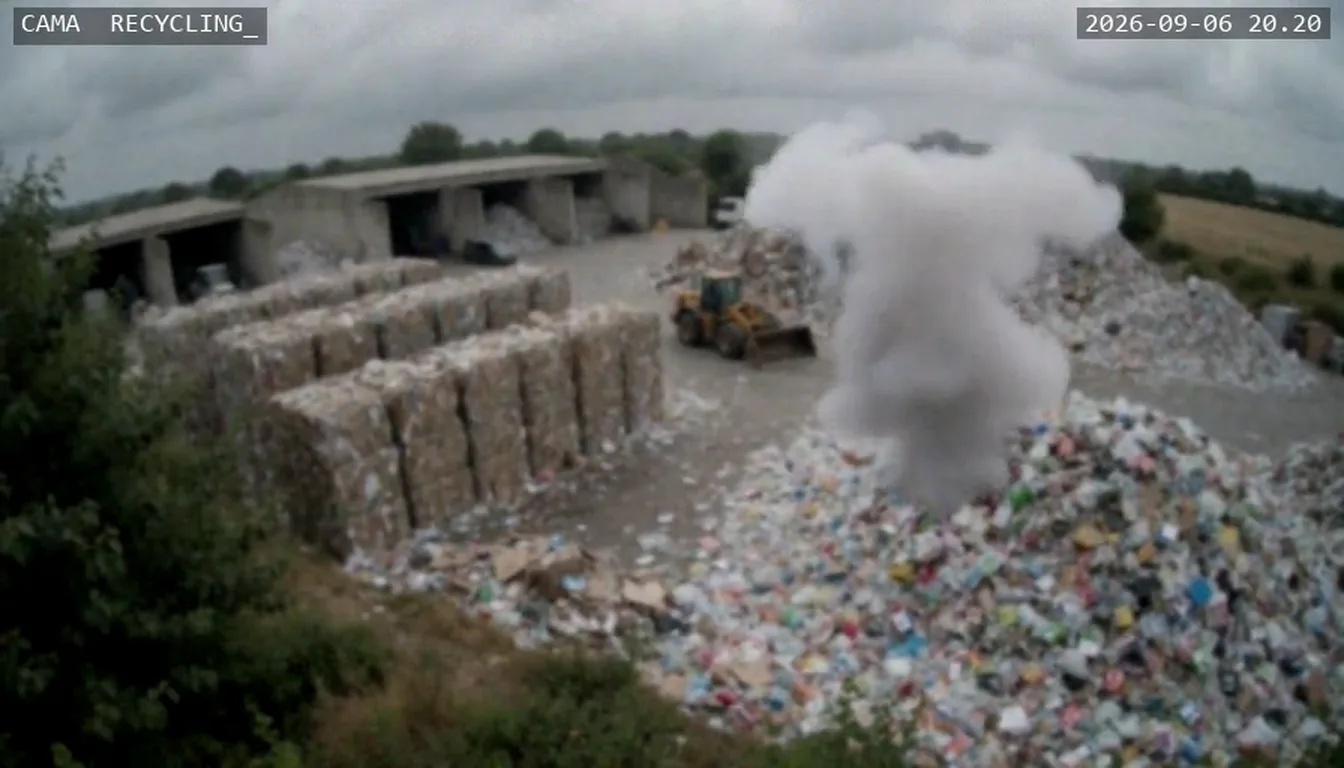
A note on the numbers below: mAP (mean average precision) is the standard score for object detectors. It measures how accurately and how completely a model finds and outlines objects, on a scale from 0 to 100 (or 0 to 1). Higher is better.
What it can do
- Improve detection when mixed with real data. In the NeurIPS 2025 DetectiumFire study, adding generated images to real training data raised YOLOv11m mAP from 43.74 to 44.52. A 2025 study on forest smoke (MFGDiffusion) reported mAP50 rising from 0.635 to 0.795 when filtered synthetic images were added, more than adding the same amount of extra real data.
- Cover what is rare. Night, infrared, fog, rain and the first minute of a fire are hard to film on demand. Generated data can fill those gaps on purpose.
What it cannot do
- Replace real data. In the same DetectiumFire study, training on synthetic images alone dropped mAP to around 33, well below real data. Quality and domain gap matter more than volume.
- Prove a false alarm rate on its own. We found no published study that trained on generated CCTV video and then measured false alarms per camera per day on real footage. Anyone who promises that number from synthetic clips alone is guessing.
What that means for how we work
Three conclusions shaped our offer:
- Synthetic data is a supplement. It goes next to your real footage, not instead of it.
- Every clip has to earn its label. We check the finished video, not the intention behind it, and we reject what is unclear.
- The only honest proof is your own test set. So we start with a pilot: you keep a frozen set of real footage, we target the errors your model makes today, and we measure the difference together before anyone talks about scale.
We would rather show a small, measured improvement on your data than a large number on ours.
What would you need to see in a pilot to trust synthetic data in your fire model?
Questions and answers
Can synthetic data replace real fire footage?
No. Published results show models trained on synthetic images alone perform clearly worse than models trained on real data. Synthetic data works as a supplement.
How much does synthetic data improve fire detection?
It depends on quality and filtering. Reported gains range from under one mAP point (DetectiumFire, mixed real and synthetic) to a much larger jump in a forest smoke study with filtered synthetic images (MFGDiffusion).
What is mAP?
Mean average precision, the standard score for object detectors. It combines how many objects a model finds and how precisely it outlines them.
How does a pilot work?
You keep a frozen test set of your own real footage. We generate data aimed at the errors your model makes today, you retrain, and we compare results on the same test set before and after.
Test it on your own model
A pilot targets the errors your model makes today and measures the result on your own test set.
Talk to us