
Surveillance that only works after the damage
In most plants the cameras are an archive. Something goes missing, someone sits down at the recorder and scrubs. If you know what time it happened, it takes an hour. If you do not, a whole day goes by, and then it turns out the culprit drove out the gate four nights ago anyway.
Large US vendors sell exactly this change today: the camera is meant to report on its own that someone is climbing the fence or that a trailer has pulled away from the bay. We do the same, only on the cameras you already have, and without sending the image to the cloud.
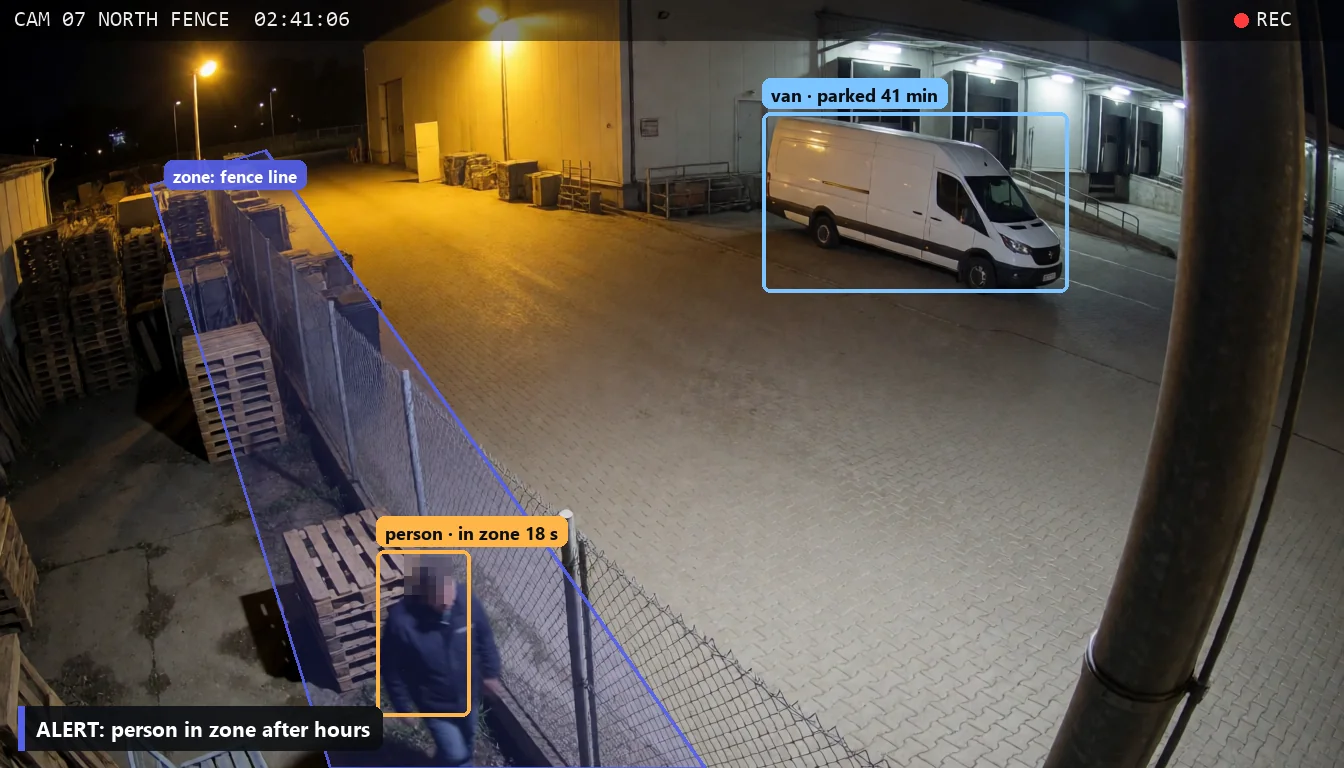
Someone at the fence at 2:40
On the image we mark the zones where there should be no people after the shift: the strip by the fence, the storage yard, the back of the hall. When a person appears there, security gets a single notification with a frame.
The difference is simple. Today you find out in the morning that something is missing. Here you find out while the intruder is still on the premises.
“White delivery van by the storage yard”
When something goes missing anyway, you do not scrub the night from eight cameras. You type what you are looking for:
white delivery van by the storage yard
The system shows the matching clips, best match first, with the time, camera and the vehicle’s path. The police get concrete material, not a promise that “we will check the footage”.
The bay stands empty while a truck waits in the yard
This use has nothing to do with security, but it draws on the same cameras. The system sees that a trailer has pulled away from bay 3 and lets the dispatcher know to bring up the next one. It also sees that a vehicle has been at the bay for two hours, though unloading finished long ago. Every hour of such dwell time is a demurrage charge, or a driver who will not make the next run.
What you get
Finding an event takes minutes instead of a day. The patrol goes where a person is, not where a cat set off the motion sensor.
Shorter truck dwell time at the bays means fewer demurrage charges and more vehicles handled with the same number of docks.
A response at the moment of the event, not in the morning. Fewer lone rounds across a dark yard “just in case”.
Staff and GDPR
Xentim does not recognize faces and does not know who is who. It sees a person, their clothing and their path. Faces and license plates can be blurred in the results. That makes the conversation with the data protection officer and with staff representatives a short one: the system protects property, it does not judge people.
See it on your own footage
The demo takes up to an hour and runs on footage from your cameras.
Book a demo