
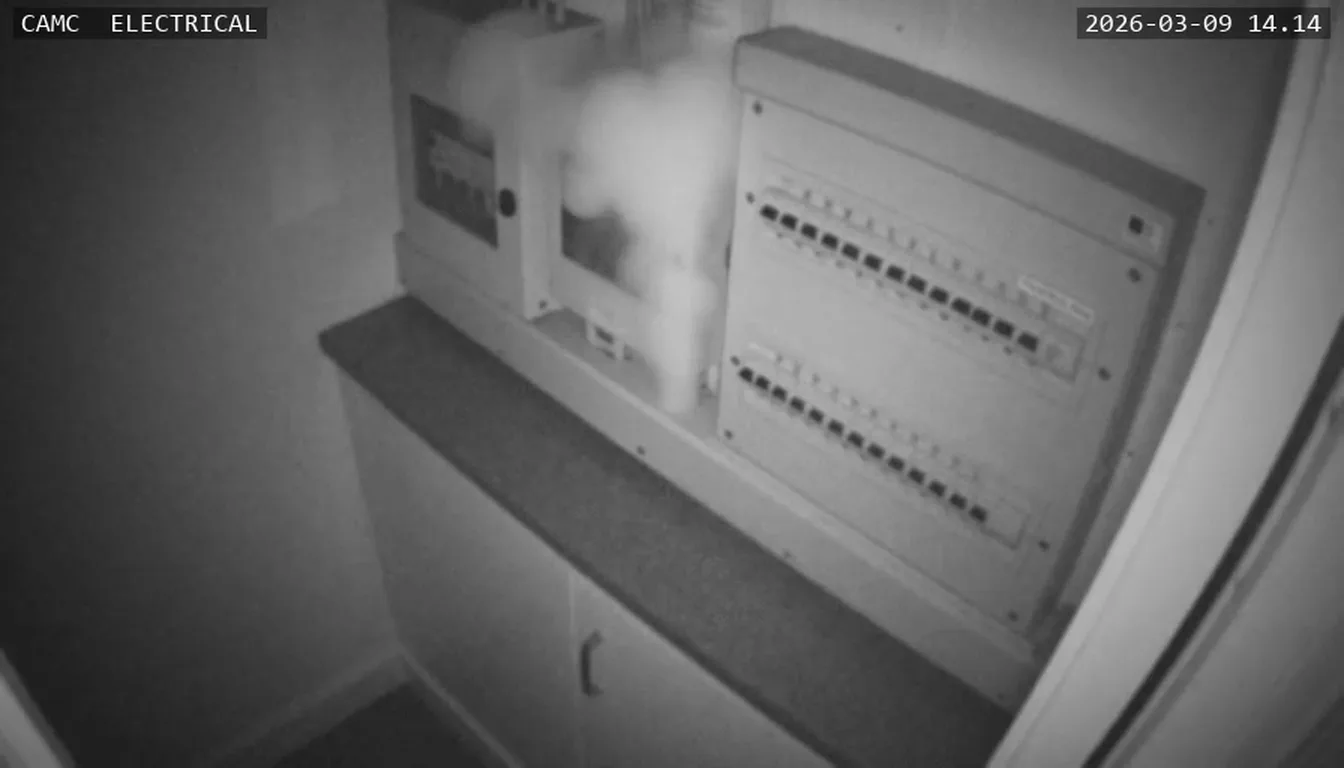
The frames that matter for early detection, the first thin smoke from a smouldering cable or a pallet, are usually missing or labelled as "background".
Labels decide what a model learns to wait for
If a dataset marks a clip as "fire" from the moment flames are visible, the model learns that fire looks like flames. It learns to wait. On a site, waiting is the expensive part: a smouldering electrical fault can produce minutes of faint smoke before anything glows.
Early detection needs two things most datasets do not have:
- An onset frame: the exact frame where the event starts, even when it is barely visible.
- A first flame frame: the moment smoke turns into fire, marked separately.
With both, you can measure what actually matters: how many seconds after onset does your model raise the alarm, and does it raise it before the flames?
What our clips carry
Every Xentim clip marks the onset frame and, for fire events, the first flame frame. The clips cover the places where slow fires start: electrical rooms, storage rooms, loading docks, recycling yards, fuel stations, container terminals. Each one carries scene, time of day, night mode, weather and season, so you can see where your model is late, not only that it is late.
We also hold back what does not pass. Of the first 113 clips in our current production run, 32 were rejected because the event was not clear enough to label honestly. A clip with a vague label is worse than no clip.
The question to ask your model
Not "does it detect fire", but "how long after the first smoke does it detect it, at night, in rain, in an electrical room?"
How many seconds of warning does your current model give you before the flames?
Questions and answers
What is an onset frame?
The first frame of a clip in which the event begins, even if the smoke is barely visible. It is the reference point for measuring how early a model reacts.
Why label the first flame separately?
Because the goal of early detection is to raise the alarm before flames appear. With both frames marked, you can see whether your model reacts during the smoke phase or only once there is fire.
Which places do the clips cover?
Electrical rooms, storage rooms, loading docks, recycling yards, fuel stations and container terminals, in day, colour night and infrared night, in several weather conditions.
Why do you reject clips?
A clip with a vague label teaches a model the wrong thing. In our current production run, 32 of the first 113 clips were rejected because the event was not clear enough to label honestly.
Test it on your own model
A pilot targets the errors your model makes today and measures the result on your own test set.
Talk to us